
Choosing between aluminium and uPVC windows is one of the most common decisions homeowners face when replacing or upgrading their windows. Both materials are durable, weather-resistant, and widely used across the UK, but they perform differently depending on what you value most: style, energy efficiency, longevity, or price.
This guide breaks down aluminium and uPVC windows across the factors that matter most, so you can work out which frame material fits your home.
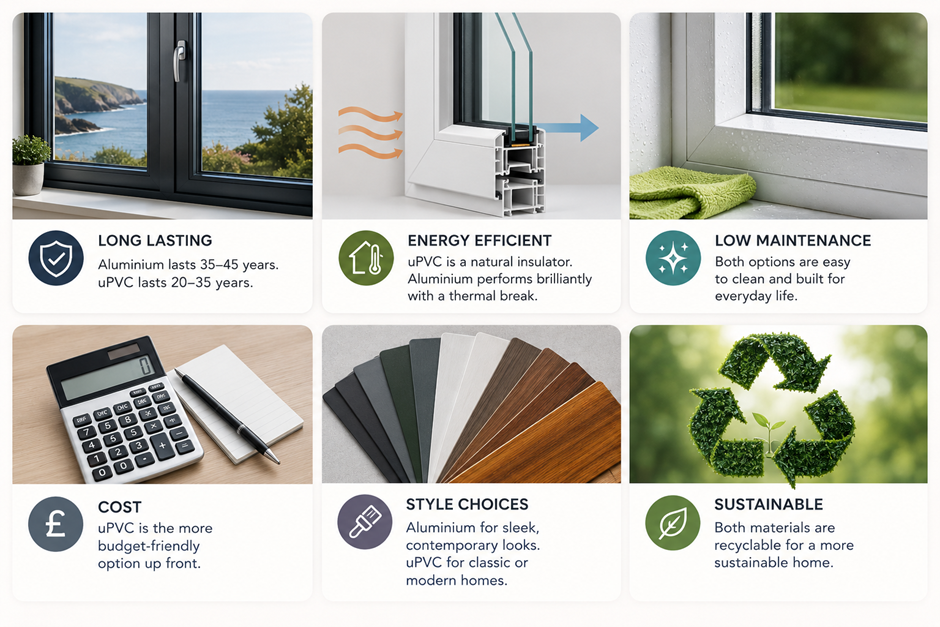
Aluminium vs uPVC Windows: At a Glance
| Factor | Aluminium Windows | uPVC Windows |
| Average lifespan | 35–45 years | 20–35 years |
| Frame appearance | Slim sightlines, sleek and modern | Chunkier profile, traditional or modern styles available |
| Energy efficiency | Good with thermal break technology | Excellent natural insulator |
| Maintenance | Minimal, occasional cleaning | Minimal, occasional cleaning |
| Price | Higher upfront cost | More budget-friendly |
| Best suited to | Contemporary homes, large glazing, coastal properties | Most UK homes, period and modern properties, budget-conscious buyers |
| Colour options | Wide range, powder-coated finishes | Wide range, including woodgrain foils |
| Recyclability | Highly recyclable | Recyclable, though less commonly recycled in practice |
Aesthetics: Slim Sightlines vs Classic Versatility
Aluminium window frames are known for their strength-to-thickness ratio. Because the material is so strong, frames can be made much slimmer than uPVC, allowing more glass and less frame per window. This gives a clean, minimal, architectural look that suits contemporary extensions, bi-fold doors, and large glazed openings. Aluminium is also available in almost any RAL colour through powder coating, and it holds that colour well over time without fading.
uPVC windows have a slightly chunkier profile but have come a long way stylistically. Modern uPVC frames are available in woodgrain foils, dual colours (different shades inside and outside), and flush sash designs that mimic timber windows, making them a strong choice for period properties as well as modern homes.
For example, if you’re renovating a barn conversion or adding large sliding doors to open up a kitchen-diner, aluminium’s slim frames will maximise light and views. If you’re replacing windows on a Victorian terrace and want a heritage look without the upkeep of real timber, a flush-sash uPVC window is often the better match.
Which Window Frames Last Longest?
This is one of the most searched questions when comparing materials, and the answer depends on how “lifespan” is measured.
- Aluminium windows typically last 35–45 years, and often longer with basic upkeep. Aluminium doesn’t warp, rot, or degrade under UV exposure, and it resists corrosion well, especially when powder-coated. This makes it a strong option for coastal or exposed properties, relevant for many homes across Cornwall, where salt air and strong winds put extra strain on frames.
- uPVC windows generally last 20–35 years. Quality uPVC is highly durable and won’t rot or corrode, but over multiple decades it can become slightly more brittle and, in some cases, discolour with prolonged sun exposure, though modern UV-stabilised formulations have significantly reduced this issue.
In short: if longevity is your top priority, aluminium window frames will generally last longer than uPVC, but a well-installed uPVC window will still comfortably outlive most other home improvements you’ll make in that time.
Energy Efficient Window Frames: Which Insulates Better?
Energy efficiency depends on the frame material, the glazing unit, and the quality of installation; all three matter.
- uPVC is a natural insulator. Its cellular structure traps air within the frame, reducing heat transfer without any additional engineering. This is why uPVC has traditionally been the go-to choice for energy efficient window frames.
- Aluminium conducts heat far more readily than uPVC. However, modern aluminium windows use a thermal break which is a strip of insulating material inserted between the inner and outer sections of the frame, which can interrupt heat transfer and brings aluminium’s performance much closer to uPVC.
With a quality thermal break and double or triple glazing, aluminium windows can achieve strong U-values and A-rated energy performance. Without one, older-style aluminium frames can lose noticeably more heat.
In short: uPVC is the more forgiving option for energy efficiency out of the box, but well-specified thermal-break aluminium windows can perform just as well. It’s worth confirming the U-value and thermal break specification before buying either.
Price: What Should You Budget For?
- uPVC windows are generally the more affordable option, both for the units themselves and for installation. This makes them a popular choice for full-house window replacements or larger projects where budget needs to stretch further.
- Aluminium windows cost more, often 30–50% more than an equivalent uPVC window, due to material costs and manufacturing complexity. The higher price reflects the slimmer frames, longer lifespan, and premium finish.
If you’re replacing windows throughout a whole house and want to control costs, uPVC will typically deliver the best value without compromising on performance. If you’re doing a single feature installation like a large glazed extension or bi-fold doors, the price difference for aluminium becomes proportionally smaller, and the aesthetic and longevity benefits often justify the cost.
So, Which Should You Choose?
There’s no single right answer as it comes down to matching the material to your property and priorities.
Choose aluminium windows if:
- You want the slimmest possible sightlines and maximum glass area
- Your property is exposed to coastal weather and you want strong long-term durability
- You’re doing a contemporary renovation or extension
- Budget is a secondary consideration to longevity and style
Choose uPVC windows if:
- You want the most cost-effective option for a full-house upgrade
- You want excellent energy efficiency without extra specification
- You want low-maintenance windows that suit both traditional and modern homes
- You’re working within a defined renovation budget
Window Installation in Cornwall: Getting Expert Advice
Coastal exposure, period properties, and a mix of traditional and contemporary homes make Cornwall a region where the “aluminium vs uPVC” decision really matters. Salt air, wind-driven rain, and older building fabric all affect how a window performs over time, which is why getting tailored advice, rather than a generic recommendation, makes a real difference.
Prolux specialises in window installation across Cornwall, helping homeowners weigh up aluminium and uPVC options against their property type, budget, and long-term goals. Whether you’re after slim aluminium frames for a new extension or energy-efficient uPVC windows for a full house upgrade, Prolux can assess your property and recommend the frame material and specification that will perform best for years to come.
Frequently Asked Questions
Are aluminium or uPVC windows better for a coastal property? Aluminium tends to perform better in coastal areas thanks to its natural resistance to corrosion, especially when powder-coated. Quality uPVC also holds up well, but aluminium is generally the more robust choice against salt air and strong winds.
Which window frames last longest, aluminium or uPVC? Aluminium window frames typically last 35–45 years, compared to 20–35 years for uPVC, making aluminium the longer-lasting option overall.
Are uPVC windows more energy efficient than aluminium? uPVC is a natural insulator and is energy efficient by default. Aluminium can match this performance when fitted with a thermal break, but budget aluminium frames without one will lose more heat.
Is aluminium more expensive than uPVC? Yes, aluminium windows typically cost 30–50% more than uPVC due to material and manufacturing costs, though the price gap narrows on larger, more complex installations.
Can I mix aluminium and uPVC windows in the same property? Yes. Many homeowners use aluminium for feature areas like extensions or bi-fold doors, and uPVC for the rest of the property to balance style and budget.